CRI1 Stress Index: Detecting Crop Stress as Early as Possible
CRI1 can flag stress-related physiological changes in crops before symptoms are visible in the field. Here is how it works, how it pairs with canopy water content (CWC), and how to use it to direct field scouting.
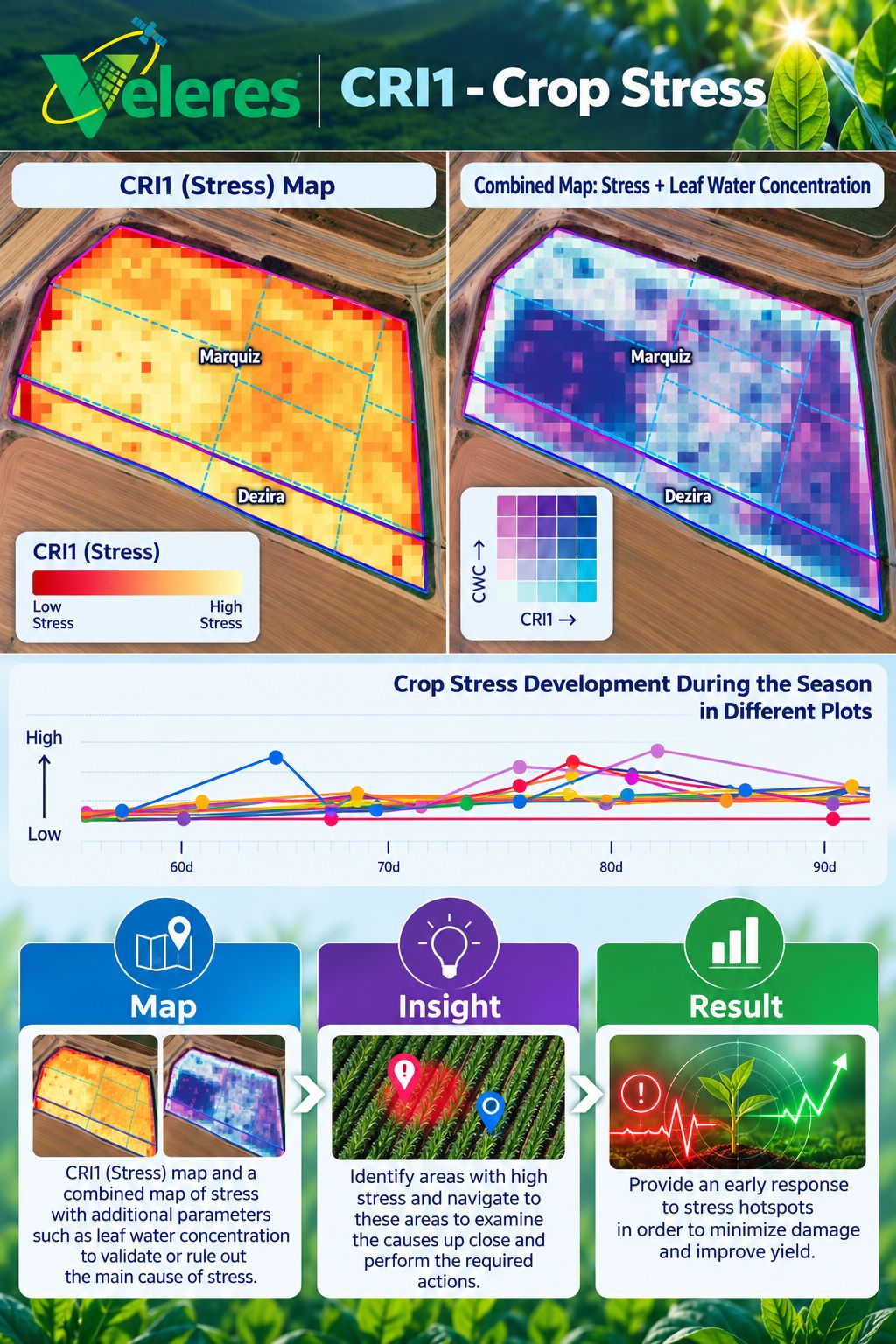
Estimated reading time: 2 minutes
CRI1, or Carotenoid Reflectance Index 1, is a vegetation index based on light reflectance that helps identify physiological changes in plants associated with stress.
The index is sensitive to changes in carotenoid pigments, which play an important role in protecting the photosynthetic system.
Unlike NDVI, which primarily reflects vegetation vigour, CRI1 can help detect physiological changes associated with stress before visible symptoms become apparent.
Why Is It Important?
Monitoring CRI1 throughout the growing season allows growers to:
- Identify areas with abnormal stress values compared to the rest of the field.
- Detect physiological changes that may occur before visible signs of crop damage.
- Compare different fields or zones within the same field.
- Monitor stress development throughout the season and determine whether conditions are improving or deteriorating.
- Direct field inspections to abnormal areas for early diagnosis and corrective action.
CRI1 and Canopy Water Content (CWC)
CRI1 and CWC complement each other:
- CRI1 provides information about physiological changes in plants associated with stress.
- CWC measures water content in the vegetation canopy and can help identify potential water deficiencies.
Combining these indices helps determine whether areas showing abnormal stress values also have low water content.
For example
- High stress and low water content: may indicate water stress.
- High stress and normal water content: may suggest other factors, such as nutrient deficiencies, diseases or environmental stress.
It is important to remember that combining these indices helps focus field investigations but does not provide a definitive diagnosis of the stress source.
CRI1 Mapping in Veleres
Veleres enables growers to visualise the spatial variability of CRI1 across the field, compare it with additional indices such as CWC, NDVI, FCOVER and LAI, and monitor changes throughout the growing season.
The goal is to turn data into a simple, actionable process:
Map → Insight → Result
- Identify areas with abnormal stress levels.
- Navigate directly to these locations to investigate the causes.
- Take corrective action as early as possible to minimise damage and improve crop yield.